Animal print has evolved from bold, decorative excess into a refined, architectural tool in modern interiors. Rather than dominating a space, it is now used with intention, often as a single, well-placed statement that adds depth, warmth, and texture. From tonal leopard rugs to statement mosaic floors, designers are embracing animal print as a sophisticated way to bring instinct, materiality, and quiet confidence into a room.
"Animal print has shed its maximalist, anything-goes reputation and emerged as one of the most considered architectural patterns in contemporary interior design."
It was once the calling card of leopard-print-everything glamour - draped across Hollywood dressing rooms and Seventies living rooms with unapologetic excess. But in 2026, animal print has undergone a quiet, compelling transformation. Applied with precision across floors, walls, and upholstery, the motif is no longer about bravado. It is about depth, warmth, and an instinctive understanding of how pattern can give a room a genuine soul.
Long before animal print became a fashion cliché, it was a symbol of raw power. In ancient Egypt, leopard skins were draped across thrones and carried by high priests - the pattern's association with authority, ferocity, and the divine made it one of the earliest luxury goods in recorded history. Across Africa, animal hides served as both practical furnishing and deeply symbolic objects, their patterns inseparable from their cultural meaning.
The 18th and 19th centuries brought a passion for natural history that filtered into interiors. Safari-inflected rooms became fashionable in the wake of colonial exploration - tiger-skin rugs, zebra hides, and leopard throws appearing in the studies and drawing rooms of the aristocracy. The pattern had become a trophy, a shorthand for adventure and conquest.
The 20th century gave animal print its most complex reinvention. In the 1940s and 50s, Hollywood elevated it to high glamour - Marilyn Monroe, Ava Gardner, and later, the designers of Studio 54 all made animal print synonymous with a certain kind of uninhibited allure. By the 1980s it had become ubiquitous, appearing on everything from carpets to curtains in an era that equated more with better.
The inevitable backlash came in the minimalist 1990s and 2000s, when animal print was exiled to the realm of kitsch. But design always moves in cycles. Today, in the hands of a new generation of interior designers, animal print has been stripped of its excesses and returned to something closer to its original instinct: elemental, considered, and genuinely wild.
.jpeg)
At first glance, this is a masterclass in restraint. White walls with classical Haussmann mouldings, a warm sisal rug, rattan furniture, a boucle accent chair - a beautifully composed, tonal palette of ivory, camel, and sand. And then: the sofa. A generous, low-slung piece upholstered in bold zebra print that somehow reads as completely natural in the room.
This is the defining trick of the new animal print interior: pairing a graphic, high-contrast motif with an otherwise utterly calm backdrop. The zebra sofa works because everything around it is deliberately quiet. It is the room's single wild gesture - and it earns that role completely. The abstract painting above, in dusty plum and taupe, picks up the zebra's earthy undertones without explicitly matching them.
This space answers one of the most common design questions - "can animal print work in a neutral room?" - with an emphatic, visual yes. The key is treating the animal-print piece as you would any statement furniture: give it air, keep the surroundings calm, and let it breathe.
Design tip: Zebra works best against warm neutrals - ivory, jute, and natural timber prevent it from reading cold or graphic.
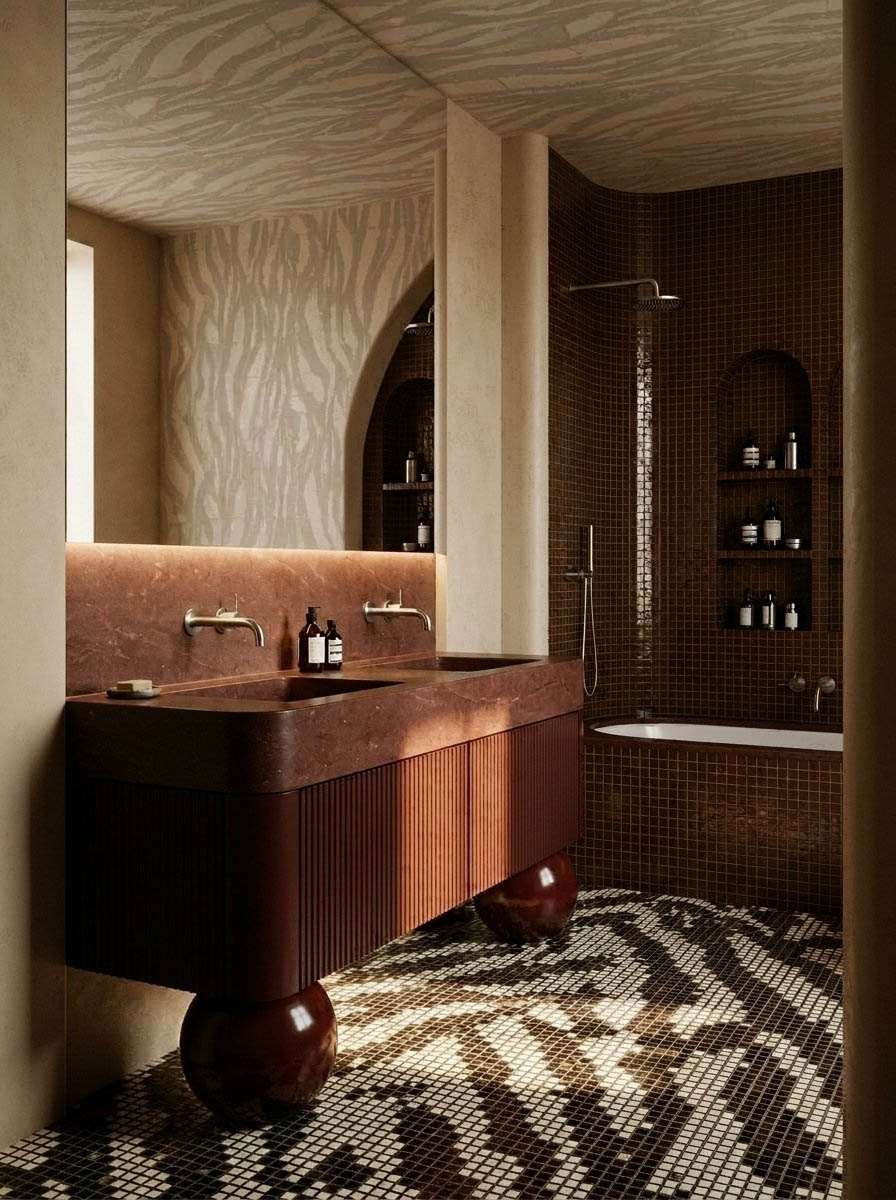
This bathroom is a study in controlled drama. Every element - the deep mocha mosaic tile on the walls, the arched mirror niches, the richly veined stone vanity top, the sculptural burgundy vessel - exists in deep, luxurious shadow tones. And then the floor: a breathtaking snakeskin-patterned mosaic in black and cream that underpins the entire room like the most extraordinary carpet you've ever seen.
The genius of this application is that the animal print is rendered in a material - mosaic tile - that is inherently architectural. This is not fabric or wallpaper that could be swapped out; this is the room's permanent foundation, as structural as the walls themselves. It signals a level of design commitment that elevates the space from "decorated" to genuinely designed.
The snakeskin pattern also works brilliantly in this context because its irregular, organic geometry contrasts beautifully with the room's rigid architectural forms: the arched niches, the rectangular vanity, the strong vertical lines of the fluted cabinetry. Pattern and architecture in genuine conversation.
For those searching "luxury bathroom floor ideas" or "statement tile design 2025," this room is the definitive answer.
Product features: Floor tiles - Bisazza, Zebra. Wallpaper- York Wallcoverings, Zebra Chic Wallpaper- Glint.
Design tip: Animal-print mosaic tile commands a room permanently — pair it with tonal, unfussy walls and let the floor own the moment.
%20copy.jpg)
The most joyful space of the four - and the one that most explicitly reframes animal print as a design-forward choice rather than a decorative one. A pale, architecture-led kitchen - arched doorways, open shelving, a sculptural cloud pendant - is grounded by a floor of large-scale dalmatian-spot stone. Organic black forms on a cream ground that echo both natural animal markings and the abstract expressionism of mid-century art.
Crucially, the floor is laid in genuine stone, not vinyl or ceramic. Its materiality - the slight variation in tone, the tactile surface - is what separates this from novelty and places it firmly in the territory of serious interior design. The rose-pink marble kitchen island echoes the warm, organic quality of the floor, and together they give the room an almost geological, natural-world logic.
This space answers searches for "bold kitchen floor ideas," "how to make an open-plan kitchen interesting," and "dalmatian print interiors" - all high-intent queries from design-conscious homeowners.
Product features: Floor tile: Cle Tile, Cinema Collection: Dolce Terrazzo. Bar Stools: Kave Home, Lambton Stool. Lamp: Artemide, Shogun. Ceiling light: Kave Home, Somar.
Design tip: Large-scale animal spots on a floor read as abstract and artistic - choose natural stone over printed alternatives for longevity.
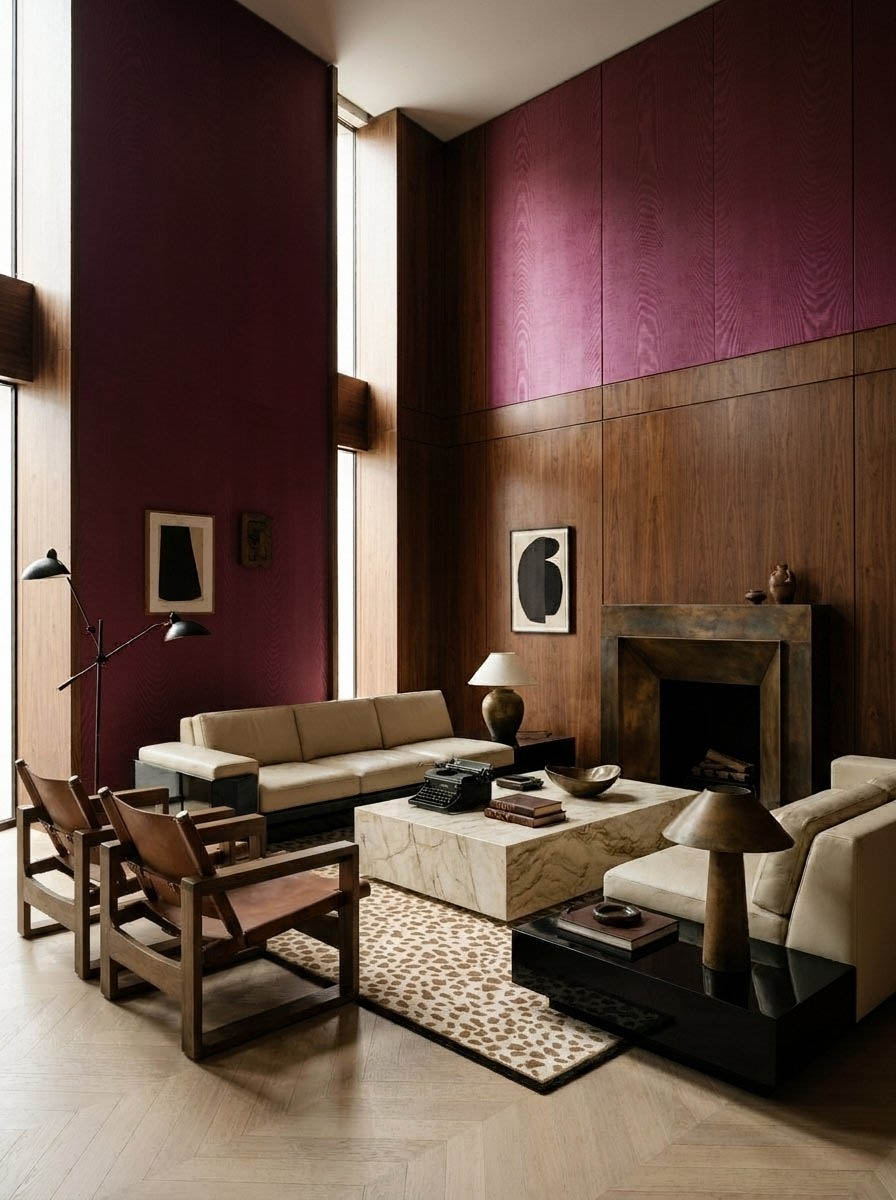
The most sophisticated room of the four - and the one that most directly confronts the idea that animal print is inherently flamboyant. A deep, burgundy-painted wall, warm timber panelling, stone fireplace, and mid-century inspired furniture in cream and camel create a room of considered, serious glamour. Anchoring the seating area: a leopard-spot rug in the exact same warm, tonal palette as the room itself.
This is the tonal animal print - where the pattern's colours are drawn from the existing palette rather than imposed upon it. The rug does not shout. It murmurs. Its spots are the same creams and toffees as the upholstery, the same warm blacks as the timber. In a room this carefully composed, the leopard print becomes almost geological - another layer of natural texture, like the grain of the wood or the patina of stone.
This approach is animal print for people who are quietly confident in their taste - and it is precisely the kind of aspirational interior that drives high-quality search traffic from design enthusiasts.
Product features: Rug: Nordic Knots, Gild 03 – Leopard. Chairs: Soho Home, Gabriel Armchair.
Design tip: A tonal leopard rug - one that shares the room's colour palette - reads as texture rather than pattern. It is the easiest entry point into animal print for the design-cautious.
Choose animal prints where the colours already exist in your room. A leopard rug in camel and black reads as texture, not statement.
Animal print in stone, tile, or quality fabric elevates the motif. The same pattern in cheap vinyl or fast-fashion fabric undermines it completely.
Animal-print floors - tile, stone, or inlay - are architectural. They define a room permanently and signal real design intent.
Animal print performs best as a solo act. Give it one surface - sofa, rug, or floor - and resist the urge to layer multiple species in a single space.
The more restrained the backdrop, the wilder the print can be. Neutral walls, natural textures, and simple furniture make animal print sing.
Large-scale spots (dalmatian, oversized leopard) read as abstract art. Fine-grain animal print (snakeskin, small cheetah) reads as texture. Choose deliberately
Animal print has always been with us - in the hides on ancient thrones, the exotic trophies of Renaissance courts, the Hollywood glamour of the golden age. What changes is not the pattern itself, but our relationship to it. In 2025, that relationship is more intelligent and more nuanced than it has ever been.
The spaces featured here share a common thread: they use animal print not as decoration, but as conviction. Whether it is a zebra sofa holding its own against classical plasterwork, or a snakeskin mosaic floor that anchors an entire bathroom in something close to theatre - each is a room that knew exactly what it wanted to say, and chose animal print as the most precise way to say it.
Done well, animal print is not loud. It is instinctive. And that, ultimately, is the difference between a room that turns heads and one that stays with you long after you have left it.
Create your own Animal Print interior fantasy at MattoBoard.com
.jpg)