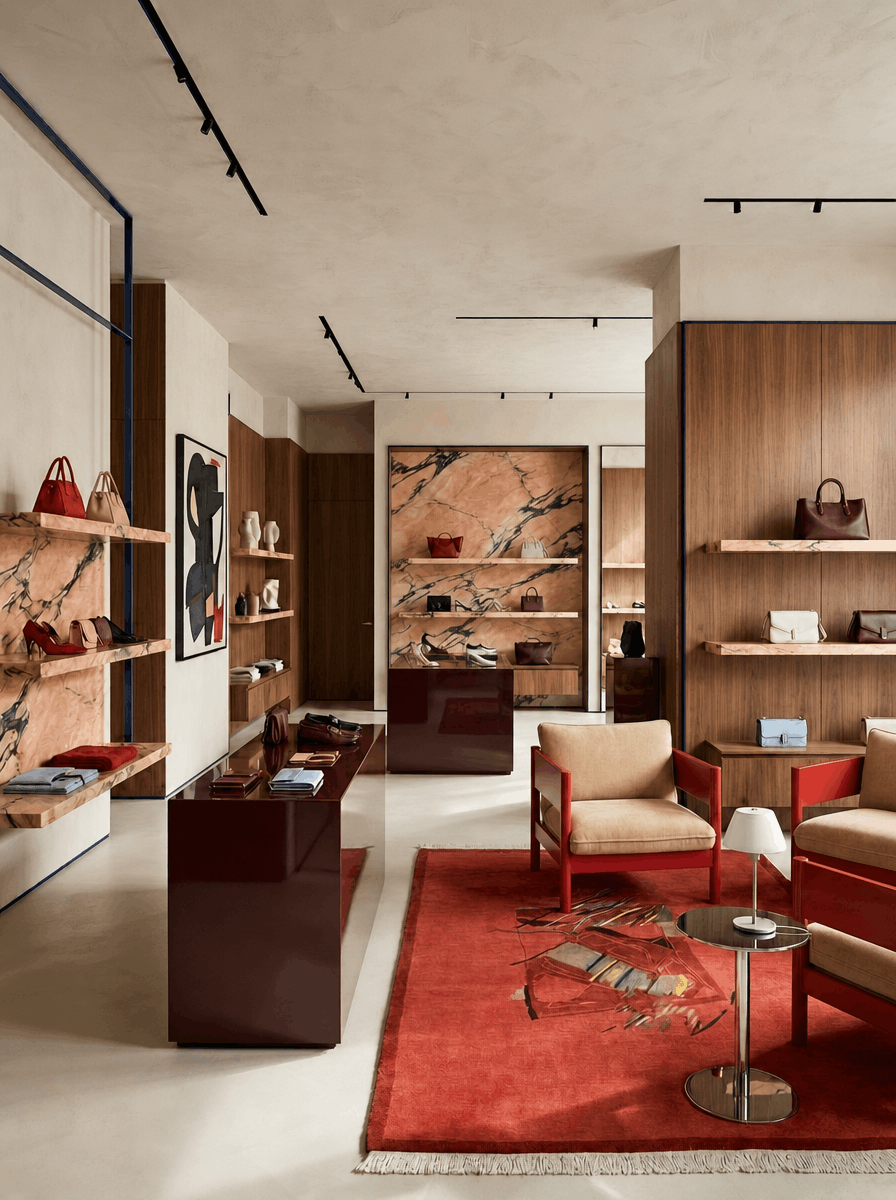
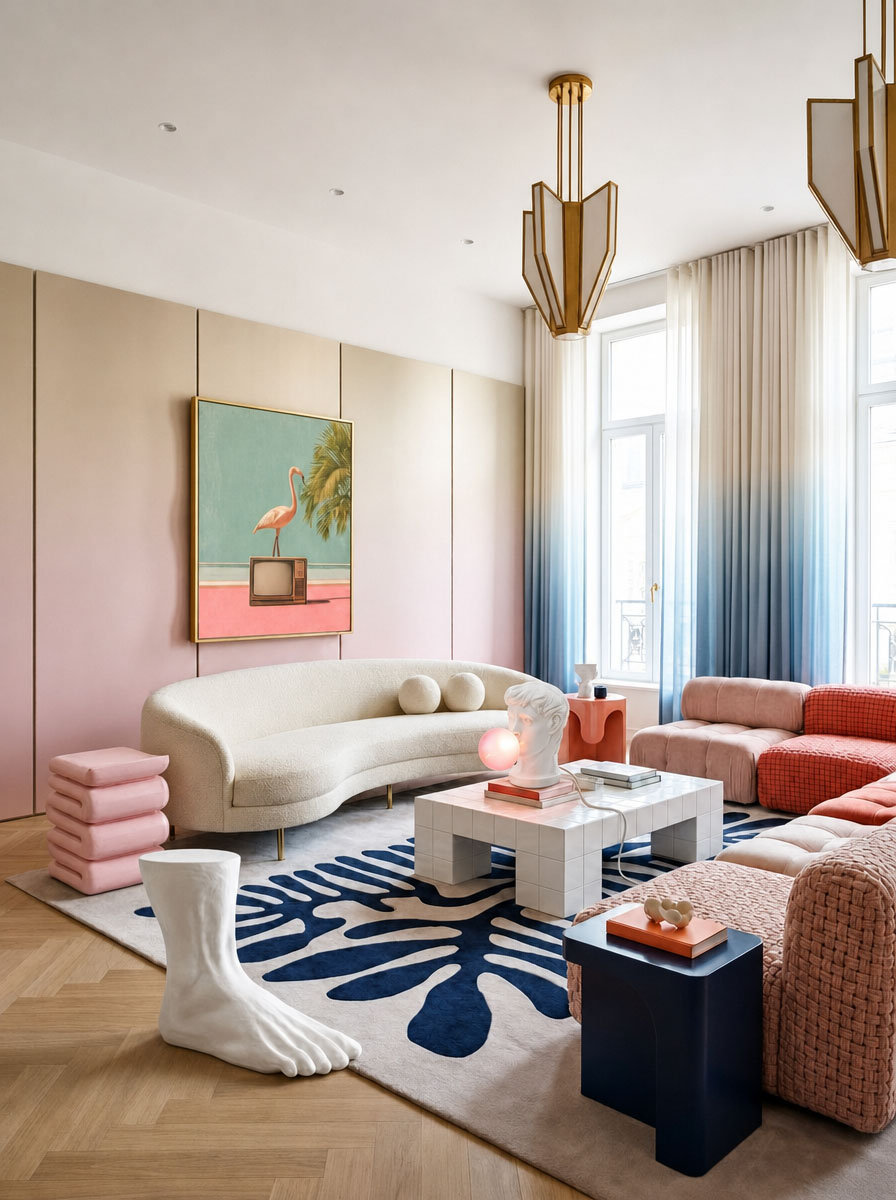
Stripes have evolved from a symbol of status into one of the most versatile tools in interior design, now used not just as decoration but as a defining architectural element. In 2026, designers are embracing them boldly across entire spaces, using scale, direction, and tone to shape mood, add structure, and create highly considered, statement interiors.
%20copy.jpg)
"From ancient Venetian palazzos to the most talked-about living rooms of 2026, stripes have never truly left - they've simply evolved into something far more confident."
Few patterns in the history of interior design carry the weight, versatility, and emotional punch of the stripe. Once a symbol of social status, later a seaside novelty, and now a sophisticated staple of high-end interiors - stripes are having a defining moment. This year, designers are embracing stripes not as an accent, but as an architectural tool, a mood-setter, and a bold statement of intent.
The stripe's story in interiors begins with power. In medieval Europe, striped fabrics were often forbidden for the lower classes - their bold, graphic nature commanded attention in a way that made them inherently political. The church famously associated stripes with moral disorder, deeming them the "devil's cloth." Yet paradoxically, this made them all the more desirable among the nobility.
The Regency and Empire periods cemented the stripe as the ultimate expression of refined taste. Tented rooms draped in bold candy-stripe silks became fashionable across Europe, epitomising the era's love of theatrical drama. The French coined the term "à rayures" - striped - and it became synonymous with elegance.
The 20th century brought democratisation. The nautical stripe - popularised by Coco Chanel - crossed from fashion into interiors, showing up on awnings, conservatory cushions, and beach houses. By the mid-century, designers like Dorothy Draper weaponised oversized black-and-white stripes in hotel lobbies, proving that the stripe could be both glamorous and grand.
Today, we're witnessing a new chapter. The 2020s stripe is confident, contextual, and deeply considered. It appears on ceilings, embedded in wood-panelled walls, woven into upholstery, and layered across entire rooms. It is no longer just decoration - it is architecture.
A Haussmann-style Parisian apartment - complete with ornate plasterwork ceilings and herringbone parquet - is anchored by a pair of armchairs upholstered in an oversized black-and-white stripe. The effect is electrifying. Rather than competing with the architecture, the stripes create a visual dialogue with the room's existing geometry.
What makes this work is the restraint elsewhere. A deep ochre velvet sofa, a simple white marble coffee table, and a graphic abstract artwork on the wall allow the striped chairs to perform without overpowering the room. The stripe here is doing the heavy lifting of a statement piece - it anchors the seating area and gives the eye somewhere definitive to land.
%20copy.jpg)
A riot of colour, pattern, and joy. A curved, geometric-print sofa sits beside rounded striped teal accent chairs, while abstract paintings pop against crisp white walls. Yet the room doesn't feel chaotic - because the stripe, appearing as a painted rug underfoot, provides the structural grid that holds it all together.
This space exemplifies the maximalist design trend of the mid-2020s: more pattern, more colour, more personality - but always governed by an underlying logic. The horizontal stripe of the rug quite literally grounds the composition, preventing the exuberant furniture from floating.
.jpg)
The most quietly radical room of the five. A warm, all-natural palette - limewashed ceilings, pale herringbone parquet, linen curtains - is transformed by a sofa upholstered in a moody brown-and-cream stripe. There are no competing colours. The stripe works tonally, adding rhythm and texture rather than contrast.
This is the stripe for people who say they "don't do pattern." Because when a stripe lives entirely within one tonal family, it reads more like texture than print. It gives the eye something to travel along without ever causing visual friction.
This warm minimalism is one of the most searched interior aesthetics right now - and the stripe is its secret weapon.
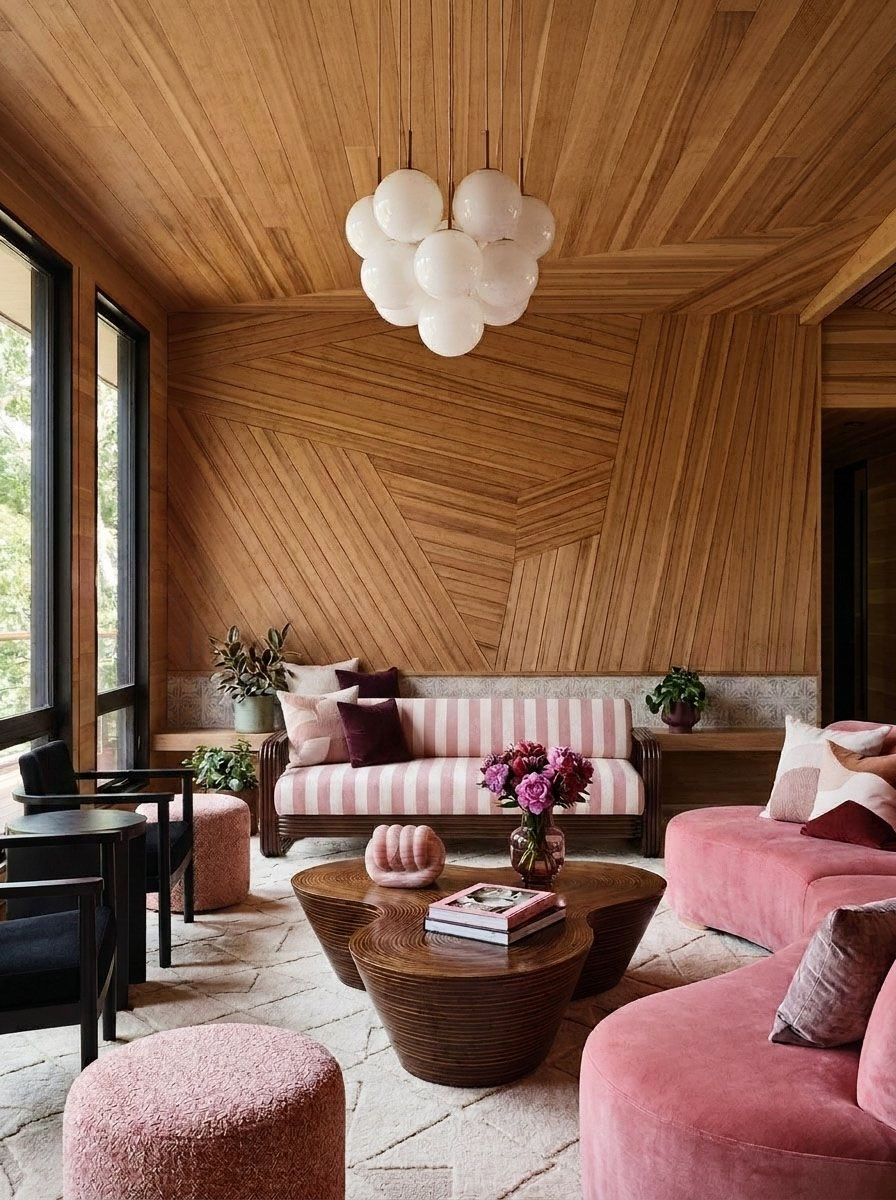
Perhaps the most unexpected pairing in the selection: dramatic herringbone wood panelling - rich, dark, and deeply textural - set against a sofa upholstered in a pink-and-white stripe. The stripe here acts as a counterpoint, injecting lightness and femininity into what could have become an oppressively masculine space.
The diagonal pattern of the wood panelling creates its own visual rhythm - and the vertical stripe of the sofa offers a counterpoint rather than a clash. This is advanced pattern mixing, and it works because both patterns operate at different scales and in different planes.
Pink pops amid brown and black in the room, creating the kind of visual surprise that earns social media saves and shares.
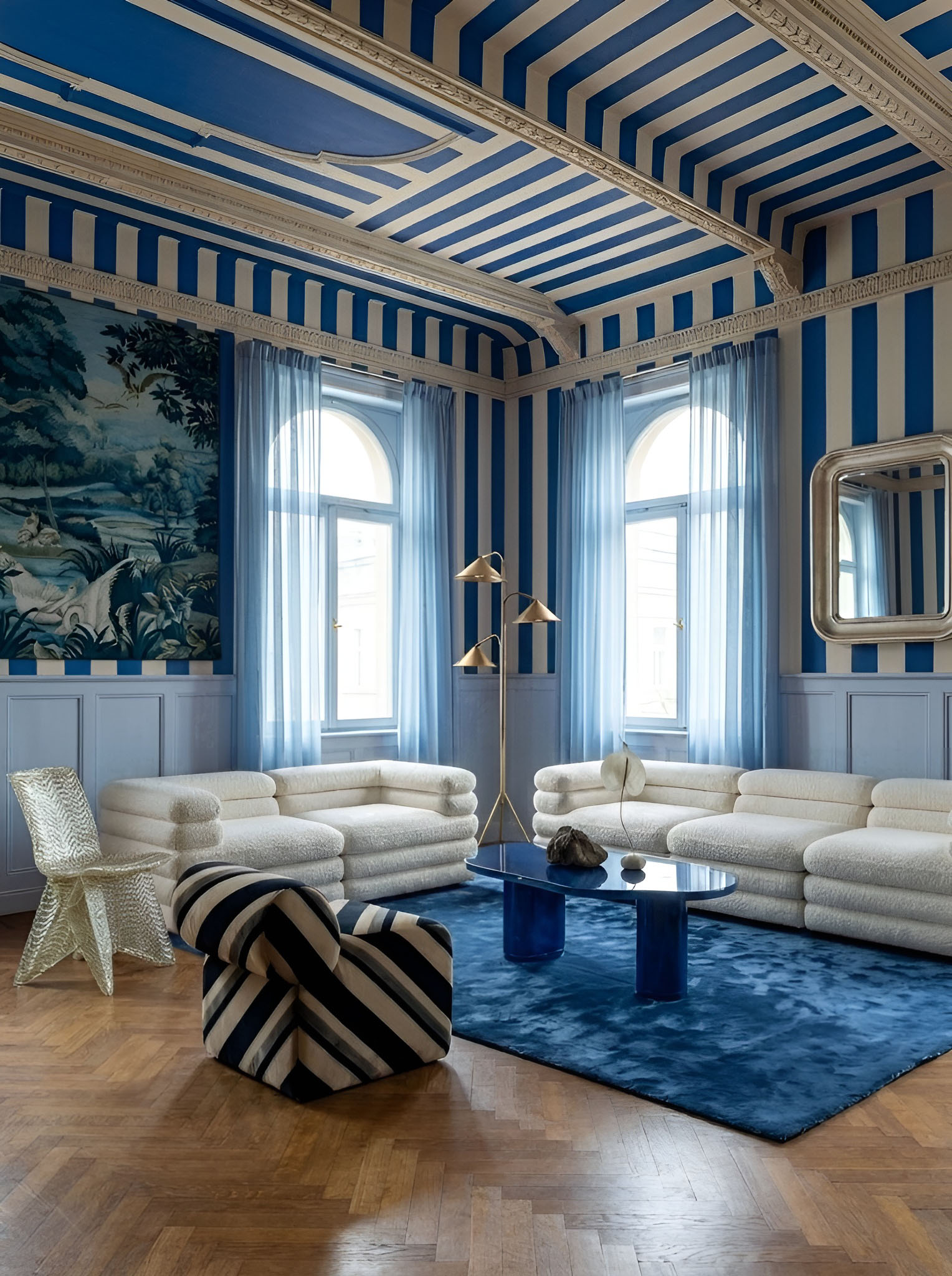
And finally - the room that commits completely. Bold cobalt-and-white vertical stripes run up the walls and continue across the ceiling in a contrasting diagonal, creating an entirely immersive environment. A historic tapestry, white sculptural furniture, and a cobalt blue rug ground the drama, but there is no question: the stripe is the room.
This is the stripe as architecture - the most daring use of the motif, and increasingly, the most aspirational. When a stripe wraps a room entirely, it collapses the distinction between walls and ceiling, making the space feel larger, more enveloping, and unmistakably designed. It's the technique that has made maximalist interiors so compelling on Instagram and Pinterest, answering search queries like "striped ceiling ideas" and "how to decorate with bold stripes" with a resounding, visual answer.
Rooms like this also perform exceptionally well as "before and after" content and "room of the week" editorial features - making them not just beautiful, but strategically shareable.
Wide stripes read as bold and modern; narrow stripes feel classic and tailored. Choose scale based on the room's proportions, not personal preference alone.
Vertical stripes add height; horizontal stripes widen a space. Use this intentionally - particularly on walls and upholstery.
Tonal stripes (same hue, different values) suit relaxed, natural interiors. High-contrast stripes suit bold, architectural spaces
A striped rug is the most reversible way to introduce the pattern - and it works in almost every interior style from coastal to contemporary.
When mixing patterns, the stripe is almost always the most versatile - its regularity provides structure amidst florals, geometrics, and abstracts.
The ceiling is interior design's most underused canvas. A striped ceiling is bold, yes - but also genuinely transformative in the right space.
The stripe has returned - not as a trend to be cautiously tested, but as a design conviction to be embraced. Whether you commit to a single striped armchair or wrap an entire room in bold cobalt lines, the key is intentionality. The spaces featured here succeed not because they used stripes, but because they understood exactly what they wanted those stripes to do.
In a design landscape increasingly drawn to maximalism, pattern, and personality, the stripe offers something rare: a motif with genuine historical gravitas that also happens to photograph beautifully, work across a huge range of colour palettes and interior styles, and feel equally at home in a Georgian townhouse and a minimalist new-build.
It is, quite simply, one of the most versatile tools in the interior designer's repertoire. And in 2026, it is having its most sophisticated moment yet.
Create your own striped interior fantasy at MattoBoard.com
.jpg)