Beautiful interiors are one thing. Building a profitable business around them? That's an entirely different design challenge. We sit down with Kris, the founder of KVM Design to talk about money, mistakes, delegation and why the future of interior design might involve doing a little less.

There's a certain irony to the interior design industry. Designers spend their days creating beautiful, considered spaces that make other people's lives easier, while their own working lives are often anything but.
Behind the perfectly curated mood boards, material palettes and magazine-worthy reveals lies a less photogenic reality: overflowing inboxes, endless revisions, late-night specification sheets and the occasional existential crisis over a pricing proposal.
It's a business built on creativity, but one that can leave surprisingly little time for actually being creative.
Kris, the founder of KVM Design knows this all too well. And she's made it her mission to change it.
Her story begins in London, where, after graduating, she worked in design studios renovating homes and designing restaurants. The projects were exciting. The working hours? Less so.
Exhausted, underpaid and craving more independence, she swapped rainy London for the Brazilian sunshine and decided to go it alone.
The dream was familiar: work for yourself, choose your projects, set your own hours and finally enjoy that elusive thing called work-life balance.
The reality had other plans.
Despite running her own business, she found herself working just as hard, earning too little and struggling to grow. It wasn't a lack of talent or ambition holding her back. It was the absence of the right systems, structure and support.
So she decided to redesign the business itself.
KVM Design was born from a simple idea: build the expert team she wished she'd had.
And the results were significant. By her second year, she was delegating 60 hours of work each month, converting that freed-up time into an additional $12,000 in billable work. In one three-month period, her monthly revenue grew from $3,000 to $15,000.
Not by squeezing more hours into the day, but by being more intentional about where those hours went.
Today, six years and hundreds of designers later, KVM helps other interior designers streamline their businesses, access specialist support and build sustainable, profitable studios. Her work now includes one-to-one mentoring, helping designers tackle the business structures and pricing strategies that make creative freedom possible.
Because, as it turns out, a beautiful portfolio and a healthy profit margin don't automatically go hand in hand.
Being in demand isn't the same as being profitable.
It's a distinction KVM believes many designers learn far too late.
When you're passionate about your craft, saying yes can feel like progress. Another project, another client, another opportunity. But without a clear strategy, a fully booked diary can quickly become a very expensive form of busyness.
The problem, she explains, is that many designers approach their business one project at a time. They're focused on delivering the work in front of them, without fully understanding what it costs to deliver, what comes next or whether the fee leaves any profit behind.
Her advice? Start with the numbers, then work backwards.
Take a studio aiming to generate $120,000 in annual design fees. If its ideal project commands a $30,000 fee, that's four well-aligned projects a year. A very different proposition from juggling twelve smaller projects, each requiring its own administration, meetings and revisions.
The difference isn't necessarily how talented the designer is. It's how deliberately they've designed their business.
Successful studios, she argues, understand who they want to work with, what those projects should cost and which opportunities are worth pursuing.
They also know when to say no.
A difficult skill, admittedly, when a new client arrives with an exciting brief. But not every project deserves a place in the diary, particularly when the numbers don't add up.
And profitability shouldn't be something you discover at the end of a project, fingers crossed, calculator in hand. It should be built into the fee from the beginning.
Pricing creative work is notoriously tricky.
How do you put a number on years of experience, an instinct for proportion or the ability to spot that almost-right shade of beige from across a room?
According to KVM, the problem begins when designers confuse the hours they spend working with the value they deliver.
Clients aren't simply buying drawings, layouts or time spent selecting finishes. They're paying for expertise, direction, confident decisions and a smoother journey towards a finished space.
And when a designer becomes more experienced and efficient, that expertise should become more valuable, not less.
It's a particularly important distinction in an industry where improved efficiency can sometimes lead to designers unintentionally earning less.
KVM advocates building fees around the full cost of delivering a project, including specialist support, overheads, contingency and profit, rather than relying on instinct or comparing prices with competitors.
She also believes that confidence in pricing comes from clarity.
A well-structured proposal that explains the process, deliverables and boundaries helps clients understand exactly what they're investing in before they reach the final figure.
And when a client pushes back on the price?
Don't automatically discount. Revisit the scope.
A smaller budget might require a different level of service, but it shouldn't mean delivering the same amount of work for a smaller margin.
A beautiful design deserves a sustainable business behind it.
Interior designers are an impressively multi-talented bunch.
Creative director by morning. Project manager by lunch. CAD technician by afternoon. Client therapist somewhere between the third revision and the fifth unanswered email.
But being capable of doing everything doesn't necessarily mean you should.
KVM has seen designers spend hours on technical drawings or renders that an experienced specialist could complete in a fraction of the time.
Her point isn't that designers shouldn't learn new skills. It's that they should question whether mastering every supporting task is the best use of their expertise.
For a studio owner, she identifies three central responsibilities: leading the business, directing the design and managing client relationships.
Everything else is worth examining.
That might mean outsourcing technical drawings, bringing in bookkeeping support or building repeatable processes for proposals, onboarding and project updates.
And she encourages designers to start before they're completely overwhelmed.
Waiting until a large project lands and suddenly demands more capacity often leads to rushed hiring and even more stress.
Instead, build systems while the business is still manageable. Document the journey from initial enquiry to handover, establish clear deliverables and identify the tasks that don't require your personal attention.
There's another important lesson here: cheaper support isn't always more economical.
KVM argues that experienced specialists can offer significantly more value than junior hires who require extensive training and supervision. The right expert doesn't simply take work off your desk. They bring knowledge and capabilities your business might not otherwise have.
After all, the goal of delegation isn't to have someone else make your mistakes.
It's to give you more time to make the decisions that matter.
Of course, running an efficient studio is only half the equation. The design still needs to speak for itself.
And even the most brilliant concept can fall flat if the client can't see what the designer sees.
Interior designers are trained to interpret plans, understand scale and imagine how materials will work together. Clients, understandably, don't always share that ability.
A floor plan might communicate everything to a designer and very little to the person about to invest in it.
That's where visual storytelling becomes an essential business skill.
KVM believes the strongest presentations don't simply show clients what a space could look like. They connect the design back to the client's lifestyle, priorities and personal story.
Why this material? Why that finish? How will this space feel to live in?
When those decisions make sense, clients are better equipped to trust the direction.
And trust has a commercial advantage.
A client who doesn't understand a concept is more likely to request additional options, revisit previous decisions or ask for another round of revisions.
Each seemingly small request adds time. Enough of them, and a carefully calculated profit margin begins to disappear.
Clearer presentations can mean more confident approvals, fewer revisions and a smoother experience for everyone involved.
Good design communication, it turns out, is good business.
Technology is changing the way interior designers work, but KVM sees its greatest potential somewhere less glamorous than generating beautiful imagery.
The real opportunity? Giving designers their time back.
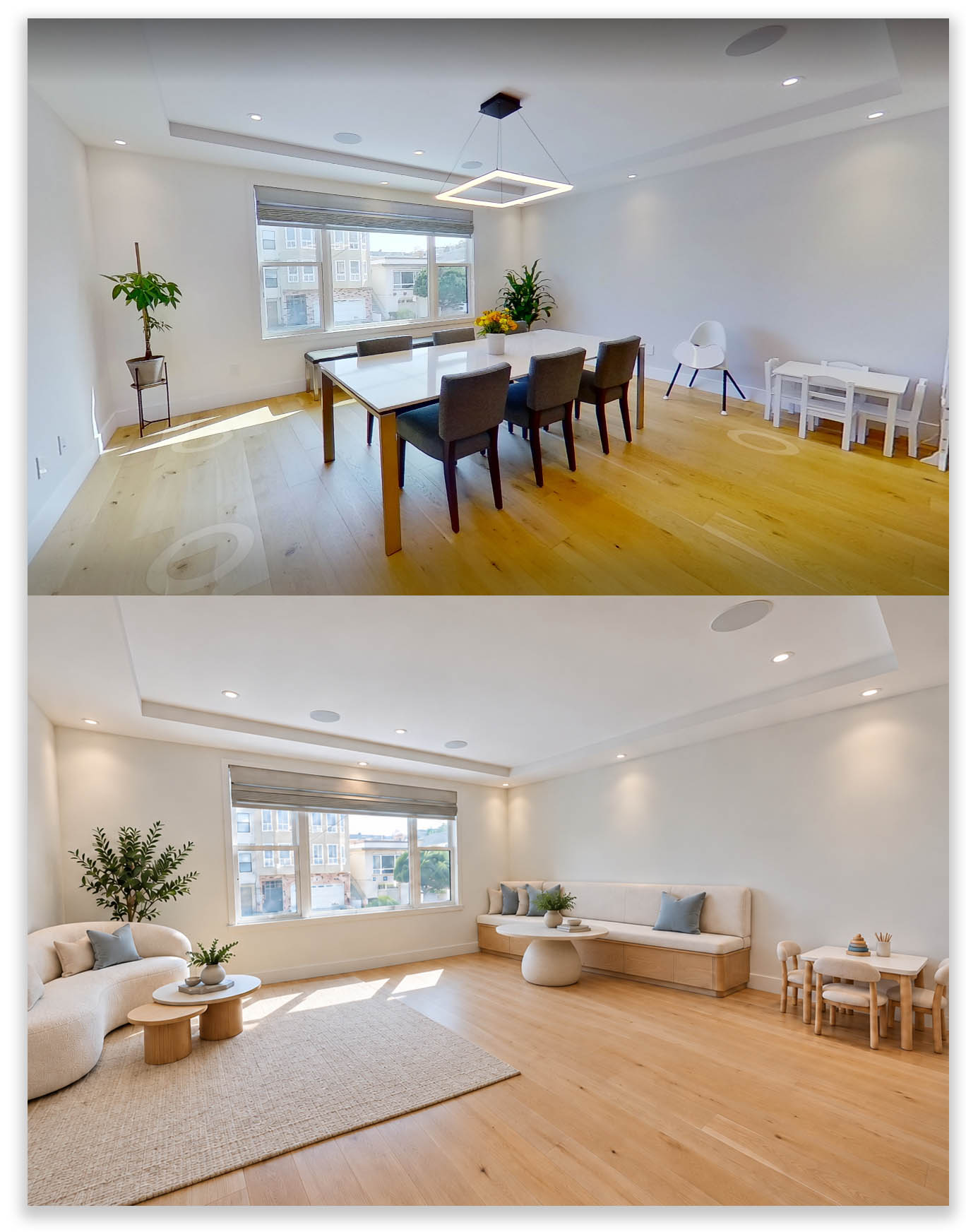
For solo designers in particular, AI can act as an extra layer of support. A recorded client meeting can become structured notes, action points and a clear team brief without hours of manual administration.
Multiply those small efficiencies across the entire project lifecycle, and the possibilities become considerably more interesting.
But KVM is clear about where technology belongs.
It should support the designer, not replace their judgment.
The creative vision, material decisions and client relationship still need a human at the centre. Technology simply makes it easier for that person to focus on what they do best.
And this is where a more connected approach to design becomes particularly valuable.
Traditionally, the journey from initial inspiration to final specification has involved a considerable amount of repetition.
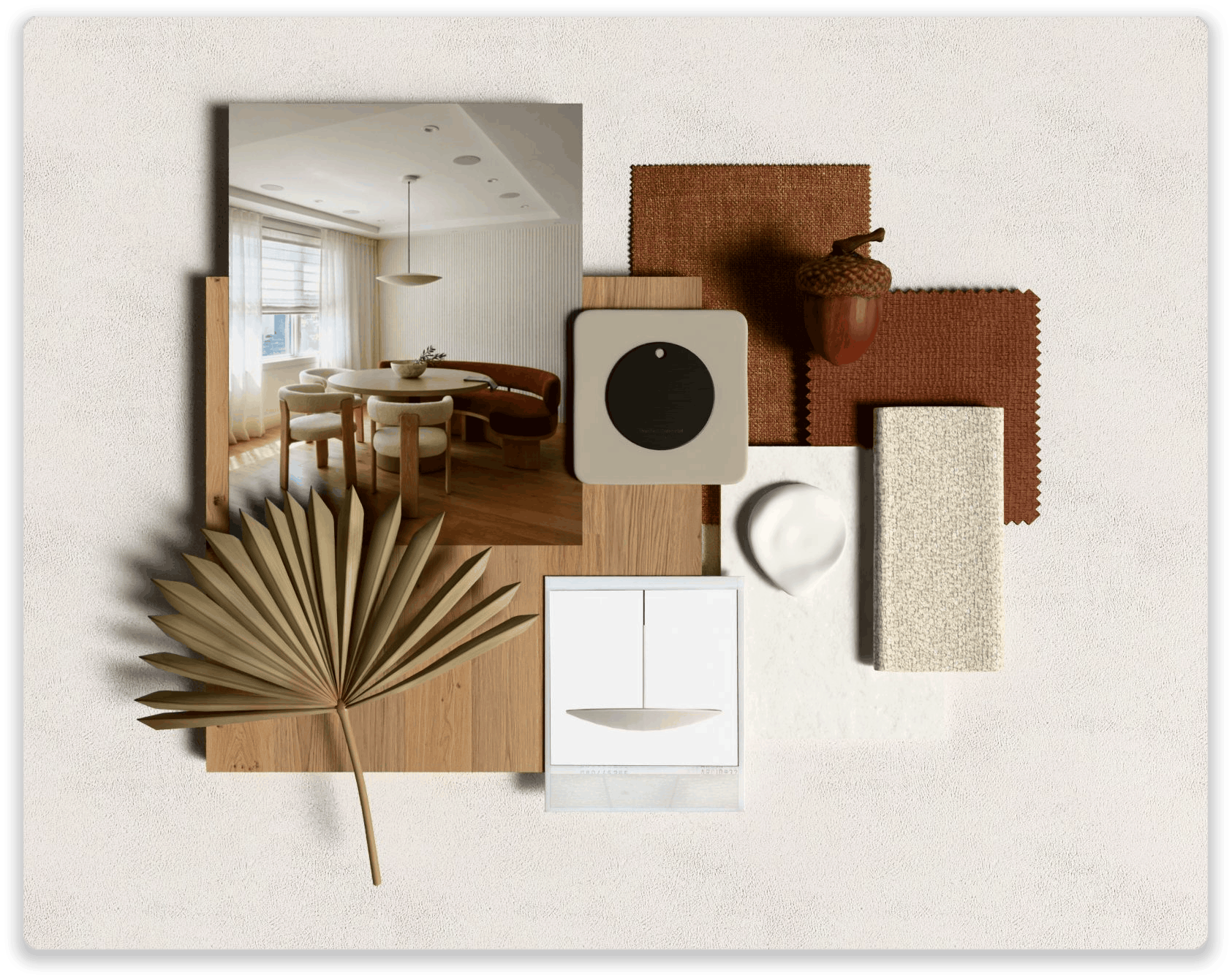
Physical materials are gathered into mood boards. Selections are transferred into schedules. Product information is tracked down, copied into documents and checked again.
Then checked once more, just to be safe.
It's necessary work, but hardly the reason most designers entered the profession.
For KVM, this is where platforms like MattoBoard have the potential to transform the creative workflow.
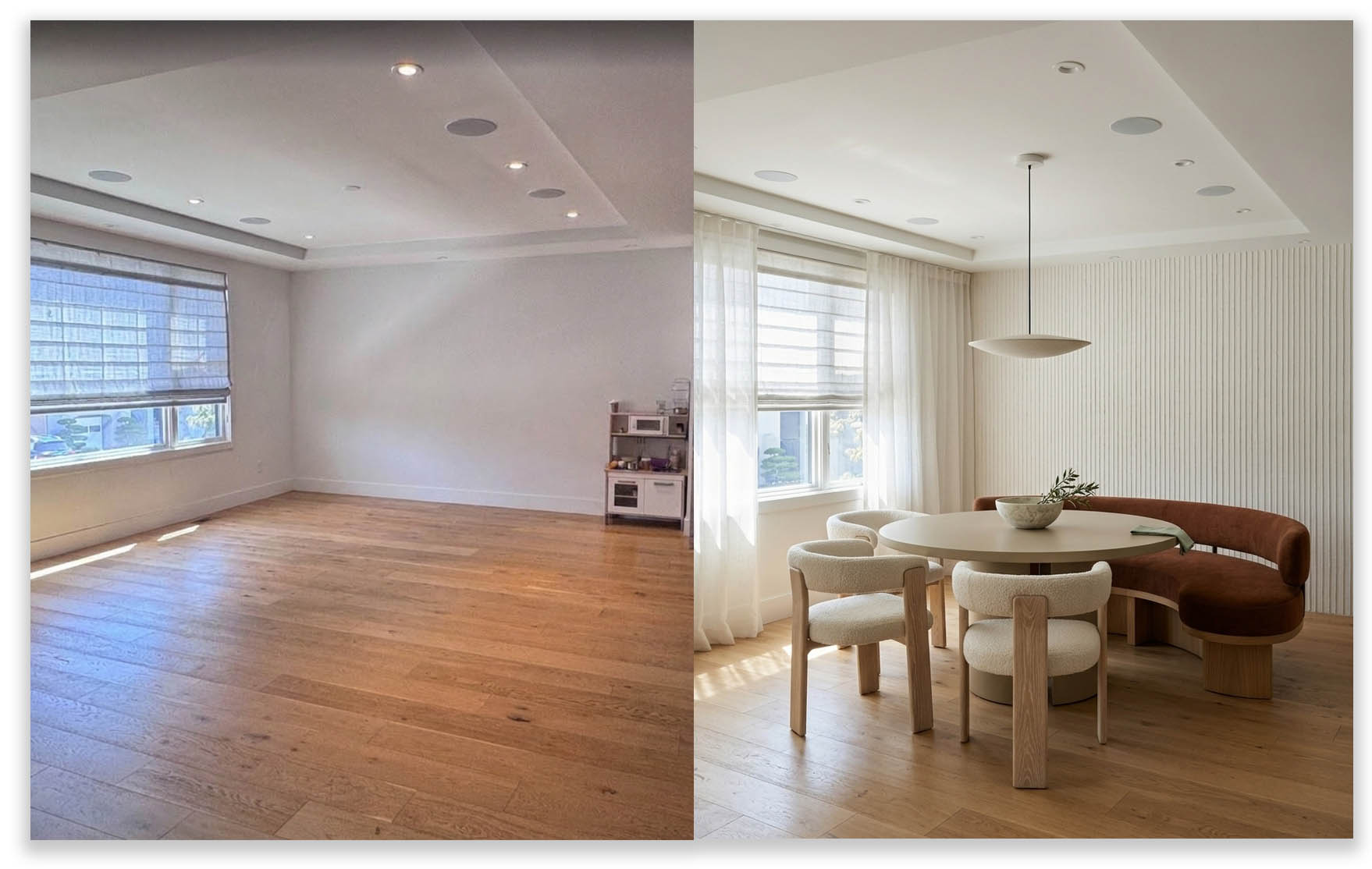
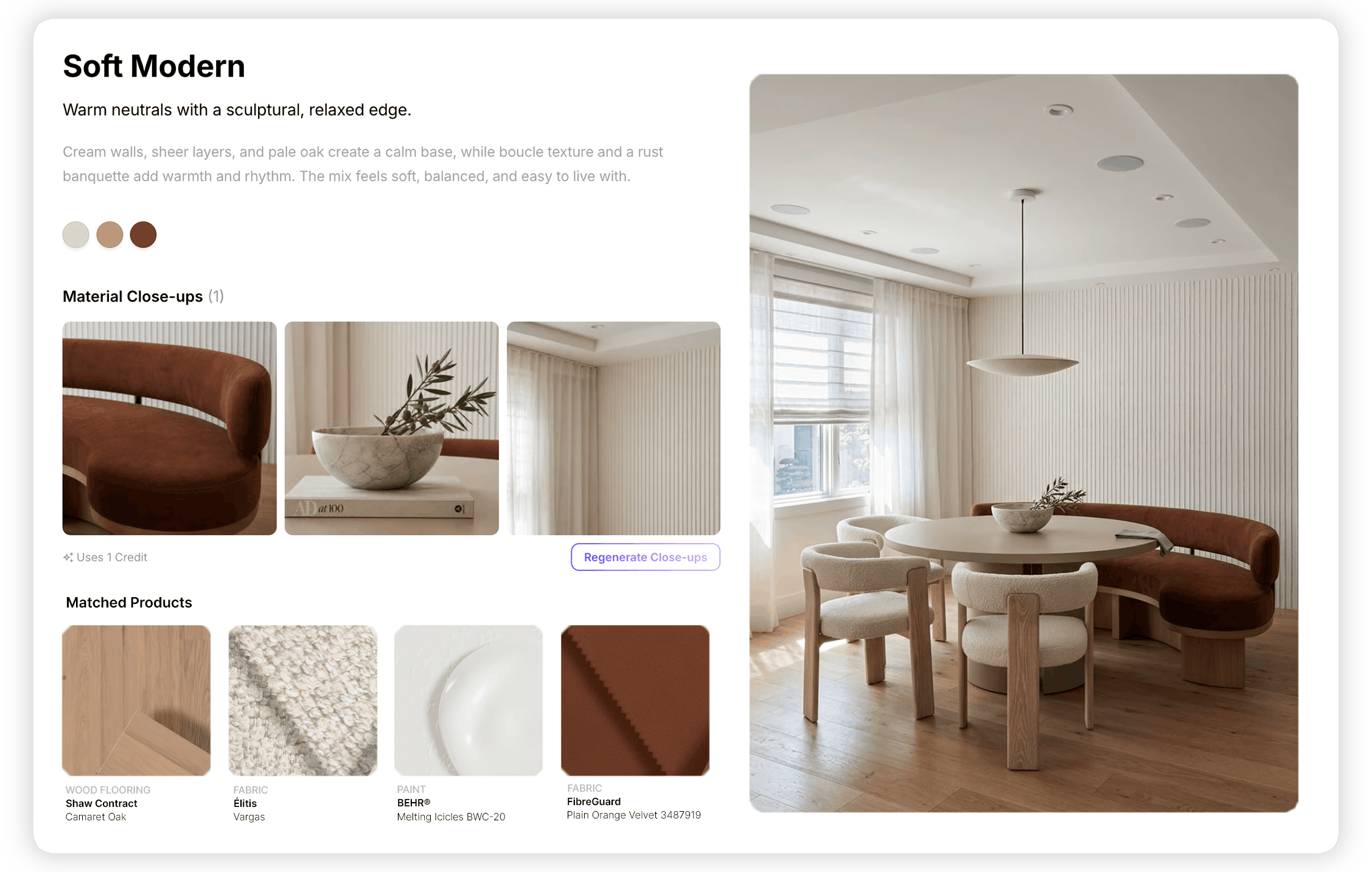
By connecting inspiration with real materials, interactive 3D boards and specifications, MattoBoard offers a more continuous journey between the initial idea and the practical decisions required to realise it.
Rather than rebuilding the same information at every stage, designers can explore material combinations, refine finishes and communicate their direction within a connected process.
That flexibility is particularly important during concept development.
At this stage, designers need room to experiment, but commissioning detailed renders for every possible option can quickly become expensive.
Being able to explore different materials and present realistic visual concepts earlier in the process gives both designers and clients more freedom to make informed decisions before significant time and budget have been committed.
And for KVM, the benefits extend beyond the presentation itself.
When selections can move more consistently between visual boards, technical models and project documentation, there's less opportunity for information to get lost along the way.
The wrong finish. An outdated product. A dimension that didn't make it into the latest schedule.
Small inconsistencies have a habit of becoming large problems, especially once a project reaches the site.
A connected workflow creates greater clarity for everyone involved, particularly studios working with external specialists or delegated teams.
But there's one important caveat.
A better tool won't fix a broken process.
Without clearly defined project phases, responsibilities and approval points, even the most sophisticated software can simply make disorganisation happen faster.
Technology works best when it's supporting a thoughtful system, not attempting to substitute for one.
There's a common misconception that becoming more efficient means making the creative process faster, more automated or somehow less personal.
KVM's perspective suggests the opposite.
When designers spend less time recreating schedules, chasing information and managing tasks that don't need their expertise, they have more time for the things that make their work valuable in the first place.
Understanding their clients. Exploring creative possibilities. Making thoughtful design decisions. Building relationships.
In other words, working smarter can create the space to design better.
But the shift requires a different way of thinking about what it means to run a successful studio.
Not every hour needs to be billable. Not every task needs to be completed personally. And not every new enquiry needs to become a project.
Sometimes the most profitable decision is knowing what not to take on.
If Kris could rewrite the rulebook for interior design businesses, she'd start with three changes.
1. Stop working exclusively on your projects. Start working on your business.
Set aside dedicated time every week to review your finances, refine your processes and think about where you want the studio to go. Growth needs attention, not just ambition.
2. Stop pricing by instinct. Start pricing with real numbers.
Understand what projects actually cost to deliver, including your time, support, overheads and profit. The right fee should make commercial sense before the project begins.
3. Stop trying to do everything. Start building the right team.
Find experienced people who complement your expertise, create processes they can follow and give yourself permission to focus on your strengths.
Simple ideas, perhaps. But sometimes the most transformative changes are the ones hiding in plain sight.
Because the ultimate measure of a successful interior design business shouldn't simply be how beautiful the finished projects look.
It should also be whether the person behind them has the time, freedom and financial security to enjoy what they've built.
And really, isn't that the whole point of good design?
About KVM Design
KVM Design supports interior designers with expert project assistance, business systems and mentoring, helping creative professionals build more profitable, sustainable studios without having to do everything themselves. Check out their website here.
Discover more about KVM Design on Instagram and explore how MattoBoard can help connect your creative ideas, materials and project workflows.