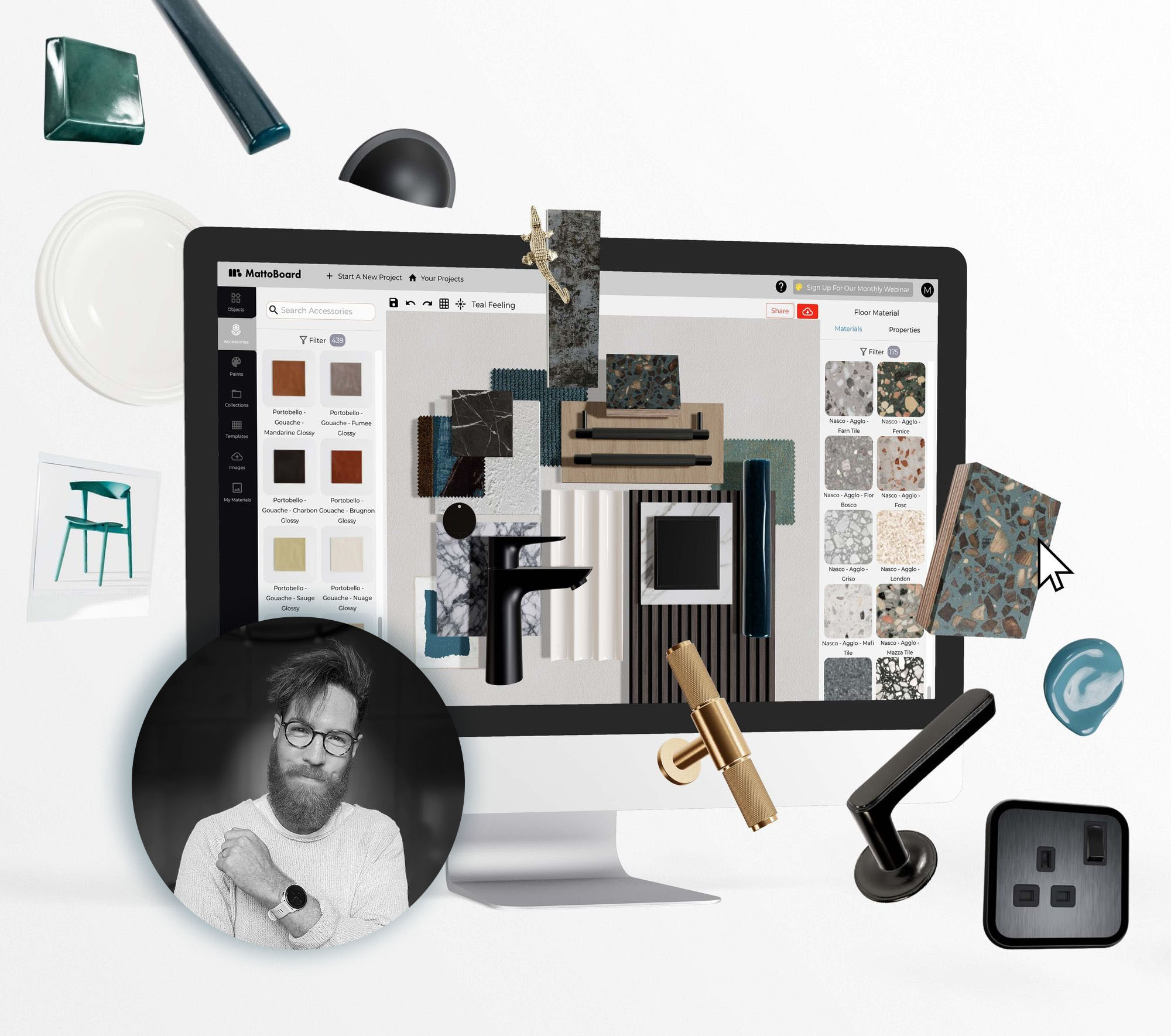
Mattoboard founder Guy Adam Ailion dives into how architecture shaped his approach to building startups, from storytelling and taste to editing chaos into clarity. He explores why design, not code, is the real advantage in a world where building is easier than ever.
In architecture, you’re constantly communicating visions that don’t yet exist. You’re standing in an empty lot trying to make people see the future.
That ability to craft a narrative - visually, emotionally, persuasively - is exactly the same muscle you use as a startup founder. Pitching a building and pitching a startup are remarkably similar acts of storytelling.
Both start with vision. You begin with something abstract - a concept sketch, a product idea - that lives only in your head. Then comes the messy, iterative middle: prototypes, models, feedback, redesign. I call this the great creative mess - a period of exploration, doubt, and adjustment before clarity arrives.
The great creative mess is inevitable. But taste is what lets you edit chaos into clarity. And taste is a moat. Anyone can sketch, but not everyone can edit. Design teaches you the discipline of stripping away, refining, and knowing when to stop. In tech, that restraint - knowing what not to build - is what creates focus and makes the end product not just functional but desirable.
Companies and design both also demand orchestration. Architects don’t build buildings; they bring together dozens of specialists - engineers, contractors, craftspeople - and align them around a shared vision. As a founder, the act is identical. You’re conducting a team of specialists to create something that, in the beginning, only you can see.
Here are the distinct skills from my design career that help me succeed as a tech startup founder and CEO.
I’m not just building features. I’m shaping experiences that must feel intuitive, human, and a little bit magical.
If you don’t start with people, everything else falls apart.
Design is psychology disguised as creativity. Translating abstract ideas into emotional resonance is probably the most valuable thing I brought into tech.
Architecture trains you to look beyond bricks and mortar and instead ask: how will someone feel when they step into this space? How will they move, connect, or even dream in it? I carry that same lens into tech.
And just as a building lives inside a neighborhood, a feature lives inside someone’s workflow. Context is everything.
An idea not communicated is an idea lost.
A design not understood is a business not built. If your concept can’t be understood by a client, a collaborator, or a builder, it won’t live. The same is true for startups: if people don’t understand the value, they can’t adopt it, and if your team doesn’t feel the vision, they can’t build it.
Designers build conviction by showing, not just telling.
In architecture, you constantly shape ambiguity into something others can feel. That superpower of visual articulation - turning a mood into a mockup, a feeling into a frame - is a huge advantage in product. It’s what makes great fundraising decks, great MVPs, great product demos. They don’t just show features; they show futures.
Fundraising, recruiting, building product - all of it is about taking an invisible thing and giving it shape, light, and form. In a world where AI removes technical barriers, clarity and emotional trust have become the new moats. You need to create belief in the unseen. That’s what good design does. That’s what good leadership does.
Startups and architecture both start with vision, but only succeed through constraint.
In design, budget, site, and regulations aren’t restrictions - they’re what give creativity its form. Scarcity forces clarity.
You don’t get precious with ideas; you test them, sketch them, mock them up. The first sketch is never the final building. The only way to find the right answer is to sketch the wrong ones first.
That mindset shapes our product culture: every release is a prototype, every failure is feedback.
Creativity gives you the courage to kill your darlings. The vision is sacred, but the pieces can change.
Put simply, embrace the great creative mess. Creativity is never linear, and neither is a startup.
Architects know this zone well - the chaos before the clarity. Taste is what lets you edit that chaos into clarity. And taste is a moat.
In tech, that restraint - knowing what not to build - creates focus and makes the end product not just functional but desirable.
People remember how you make them feel, not how many layers of logic you can describe.
When you walk into a room, you don’t catalog dimensions - you notice the light, the warmth, the way it feels to be there. Tech is no different. Users don’t obsess about lines of code; they care whether the product “just works.”
In architecture, if your concept isn’t simple, the complexity of construction will collapse it. In tech, the same rule applies: if I can’t explain our product in one line, it’s not clear enough. I’ve always believed: an idea that can’t be drawn on a napkin isn’t ready yet.
Design is the removal of noise and addition of clarity. A great space feels inevitable - as if it was always meant to be that way. As a CEO, I bring that same carving-away instinct to product, team culture, and communication.
One of the biggest shifts from architecture to tech was unlearning the need for consensus.
In architecture, you often seek approval from committees and planning authorities. In startups, speed beats symmetry. What you need is conviction - the courage to say, this is the hill we’re building on, and here’s why.
That conviction comes from taste. Not just visual taste, but decision-making taste - knowing when something’s too messy to launch and when it’s just messy enough to be real.
We are entering an age where conductors will lead. You don’t need to know every instrument - you need to feel the music and guide the orchestra. That’s what designers do. And in a world of AI, that’s what the best founders will do too.
So if you’re a designer wondering whether you have what it takes to start a company - you do. The skills you’ve spent years building - taste, empathy, storytelling - aren’t soft skills. They’re superpowers now. You don’t need permission from engineering. You need conviction from yourself.